Typical damages we repair
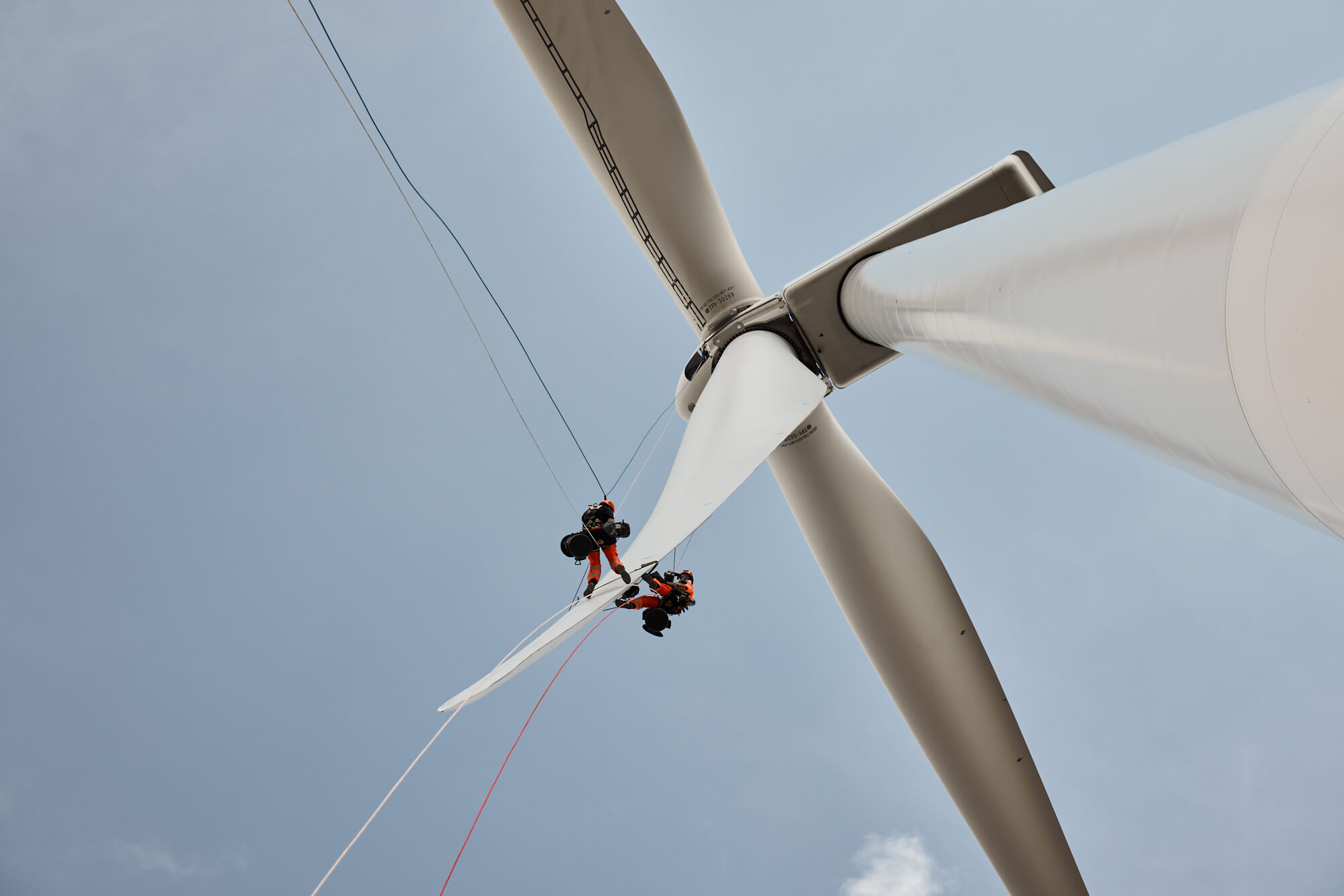
Most wind turbine blade repair work falls into four groups:
- Factory / manufacturing defects: dry laminate, voids, wrinkles, misaligned plies, weak bond lines and open trailing edges built in during production. These typically call for a retrofit repair to strengthen the weakened areas.
- In-service wear: leading-edge erosion, surface cracks and coating breakdown. These are cheap Cat-1/2 findings until poor maintenance or incomplete annual reporting lets them grow unseen into Cat-3, 4 or 5 structural damage.
- Lightning damage: the most underestimated cost driver on the blade (see below).
- Blade upgrades: Vortex generators to re-energise airflow and recover lift and AEP; Dino tails (trailing-edge serrations) to reduce aerodynamic noise; and LPS upgrades, new receptors, down-conductors and root terminals to restore reliable lightning protection.
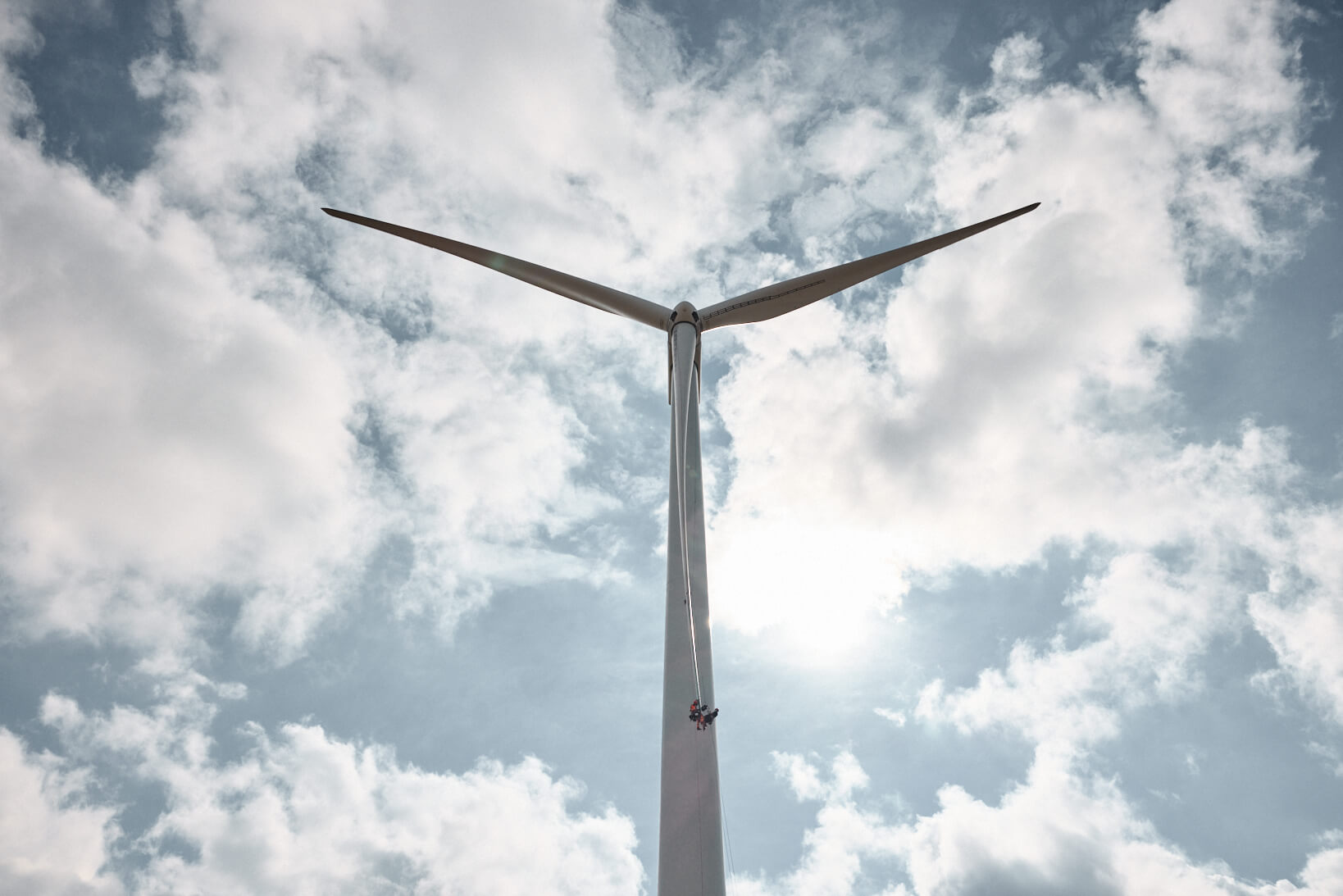
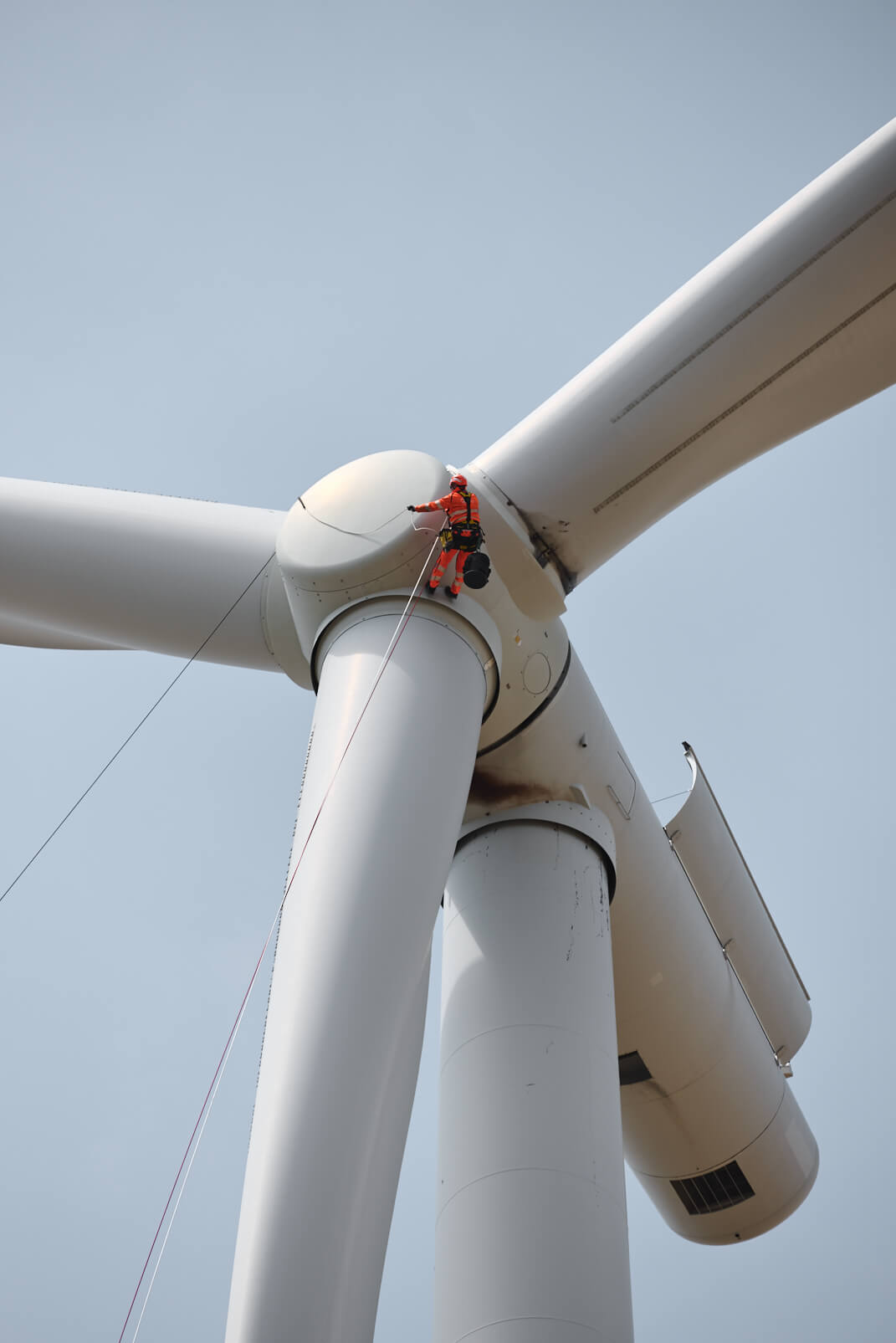
Lightning and the true cost of a weak LPS
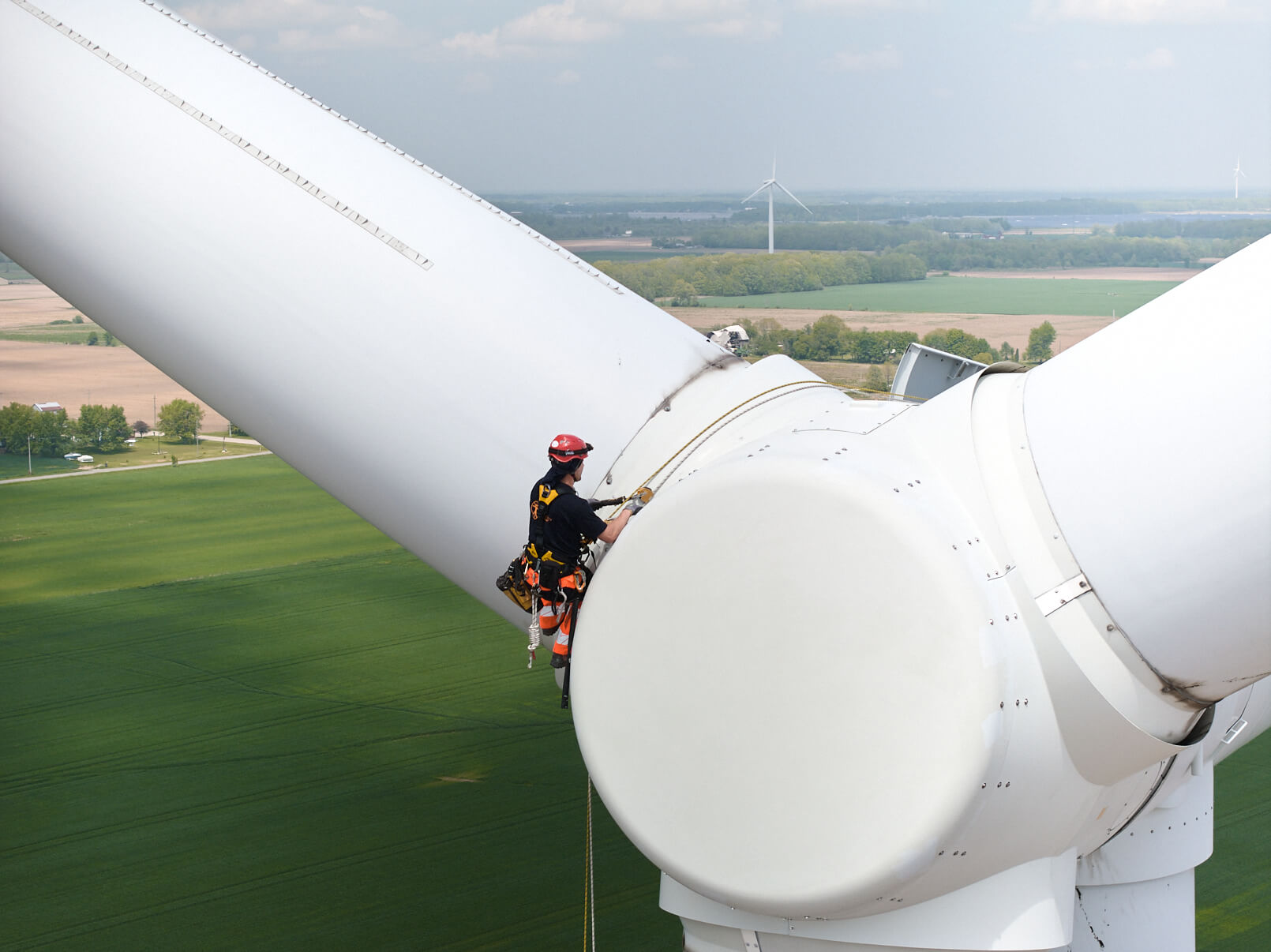
When lightning strikes a blade whose down-conductor cannot carry the current, the energy can blow out through the laminate, splitting the shell and turning a survivable strike into a major repair and the turbine downtime that goes with it. We test every receptor from tip to root and verify down-conductor continuity. In high-lightning regions we recommend an annual LPS inspection: a small, planned cost set against a very large unplanned one.
Wind turbine blade repair
We categorise every defect (Cat 1–5), then repair to the like-for-like rule, whatever is removed is rebuilt exactly OR re-inforced potentially through retrofits solutions. The outer laminate is ground back to sound material and a shallow scarf is set so each repair ply, Biax, UD or Triax overlaps onto healthy laminate per the overlap rules in the given WI, Wet or delaminated PVC/PMI core is moisture-tested and replaced; full-thickness damage is rebuilt on a hard backing before the core and outer skin go back. We laminate with a structural epoxy resin, consolidate under vacuum at 0.8 bar, and post-cure under a heating blanket (typically 5 h at 70 °C). Cure is verified by Barcol or Shore D hardness before filler, fairing to profile, and topcoat / LEP.