What leading edge erosion does to the blade
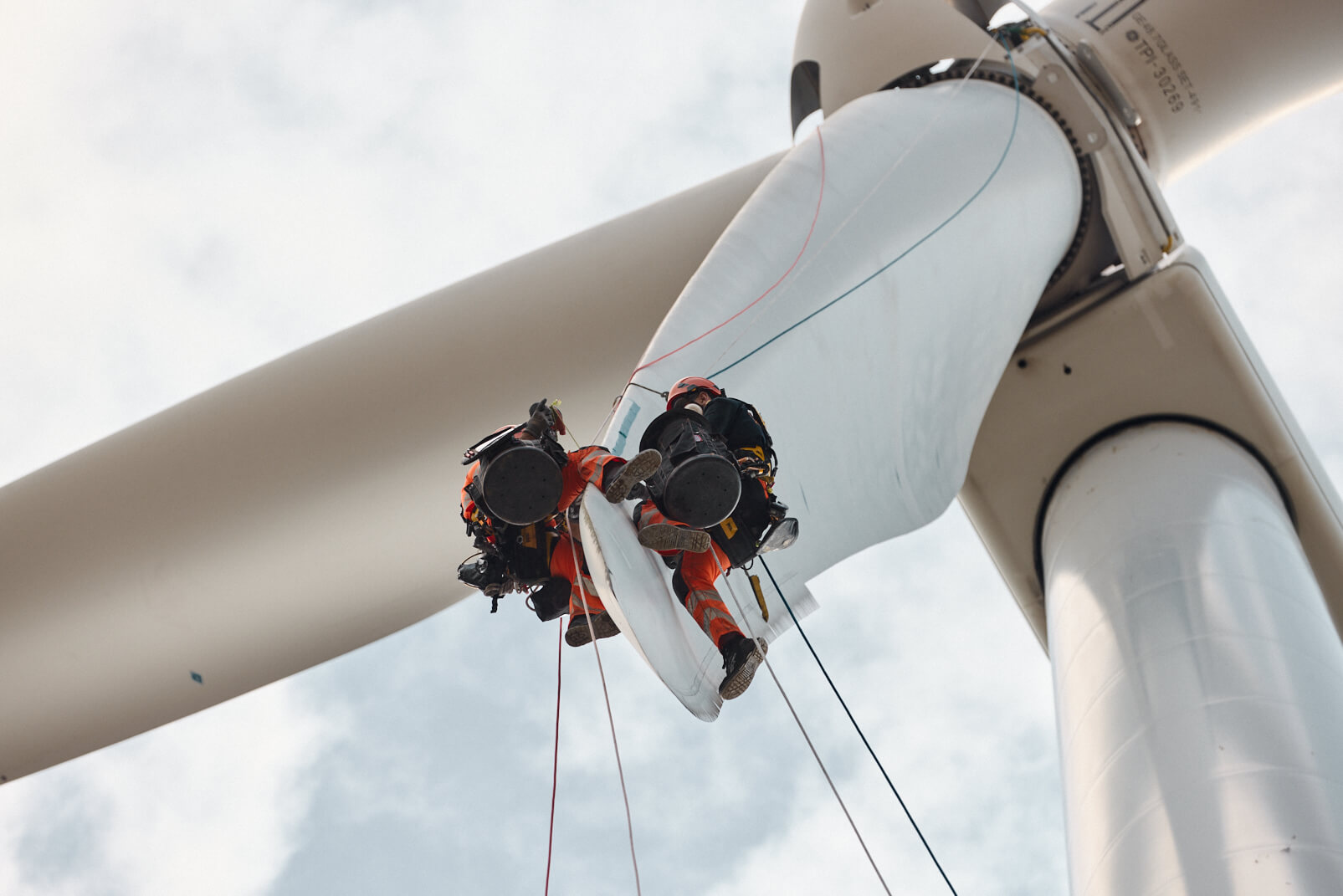
Leading edge erosion progresses in stages: first a matte, pinholed coating; then gouges through the topcoat and filler then exposed, fraying laminate and finally delamination and structural damage. Aerodynamically it bites early, even moderate leading edge erosion realistically costs 2-5% of a blade’s annual energy production (AEP), and that lost production is never recovered. Once the laminate is exposed, water ingress and Cat-3-to-5 structural damage follow.
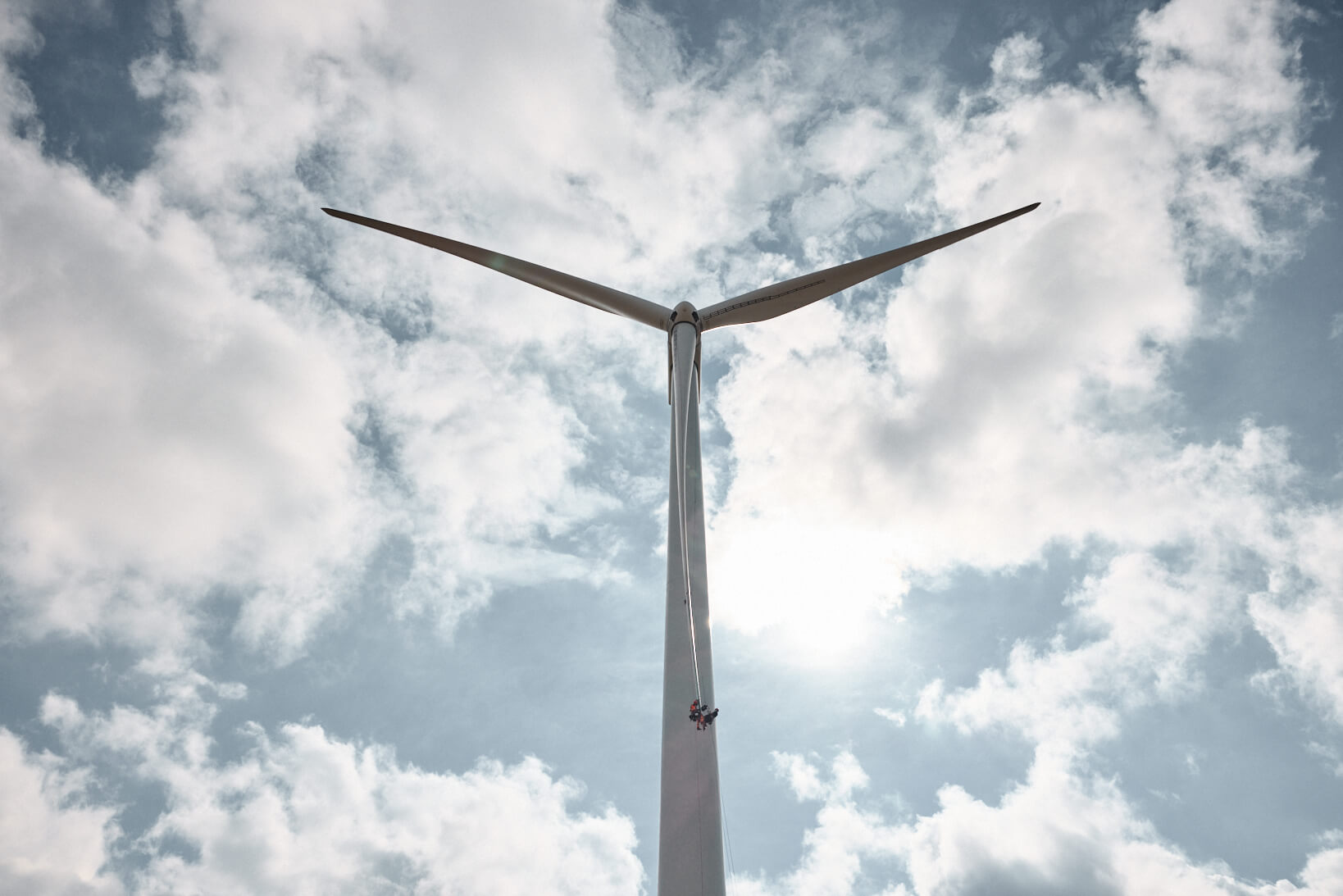
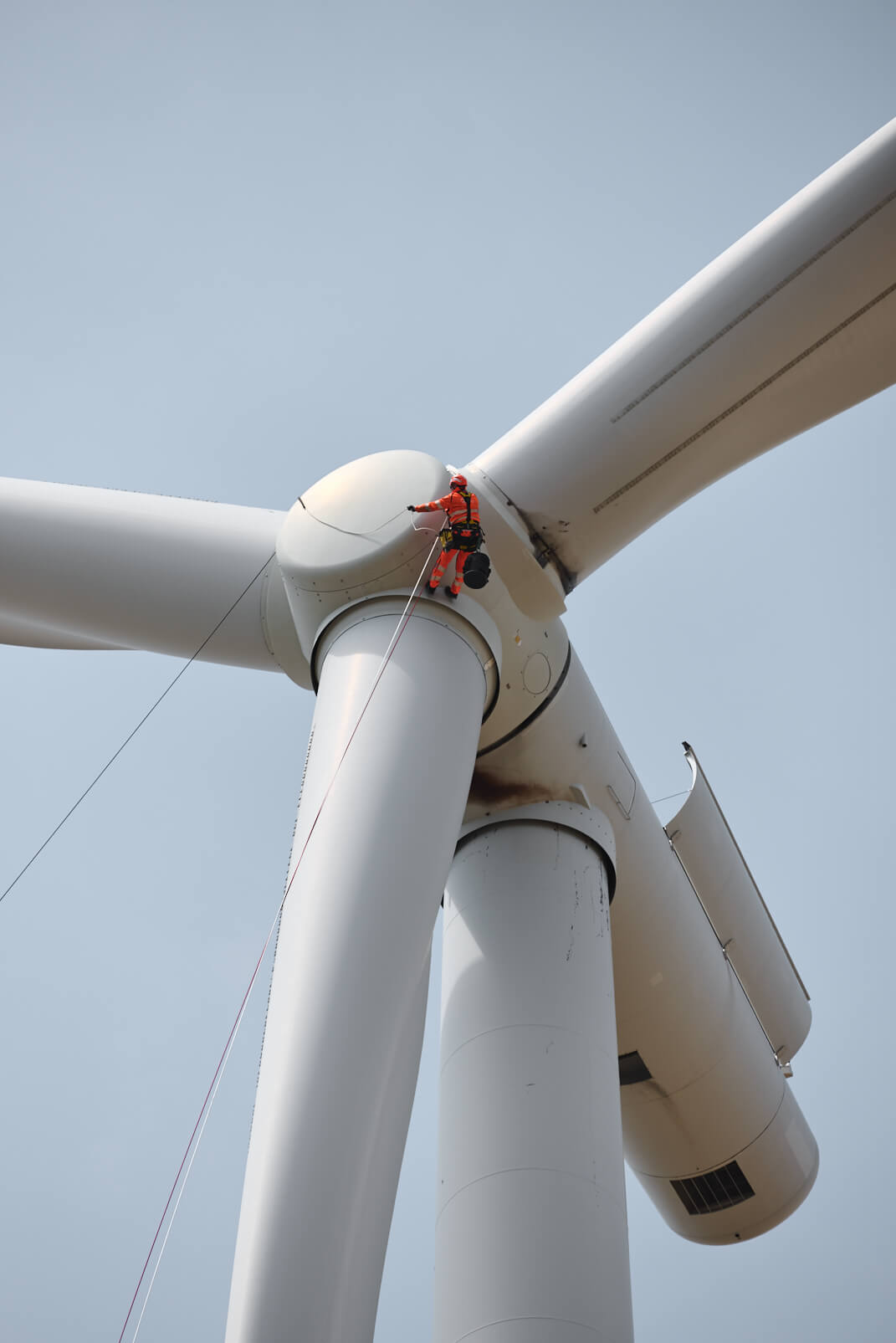
Why maintaining beats repairing
The cost of leading edge erosion is not only the repair itself, it is how long the repair takes, and when you are able to do it. On exposed, high weather-standby sites the working windows are short, so every visit has to count and the aim is to complete as much as possible per mobilisation. Maintaining the leading edge protection on a sound edge is a short job, typically two to three days per turbine and it protects the edge for years again. Let that same edge erode into the laminate, and a full leading-edge structural repair can easily run five to ten working days per turbine. At that point the economics of a quick maintenance visit are gone, and that difference is multiplied by every turbine in the wind park. Acting while the damage is still in the coating is, simply, the cheaper path.
Prevent it with the right leading edge protection
The only reliable way to stop leading edge erosion returning is to protect the edge, and the right system depends on the site:
- Pre-formed polyurethane (PUR) shells: factory-cast shells bonded to the leading edge. The toughest, most erosion-resistant option, and our usual recommendation for offshore blades and for sandy or high-rainfall sites, where conditions are hardest on the edge. Application time is longer compared to a wet-applied LEP.
- Wet-applied coatings: a field-applied LEP layer that can be repaired directly on the blade — either as a full re-coat or as small, localised touch-ups. That repairability keeps the average cost over time lower, which is why a wet-applied product is our usual recommendation for onshore sites. Application time is faster compared to pre-formed shells.
- LEP tape / film: quick to apply, but very difficult to repair or replace once it lifts or is damaged — a tape failure usually means stripping and re-applying rather than a simple touch-up. For that reason, we do not recommend it.
Fixed-price erosion repair and LEP
We offer leading edge erosion repair and leading edge protection as a fixed-price concept — scoped per metre of leading edge and agreed before work starts. Predictable cost, applied to specification.
Certified, from Rope Access or platform
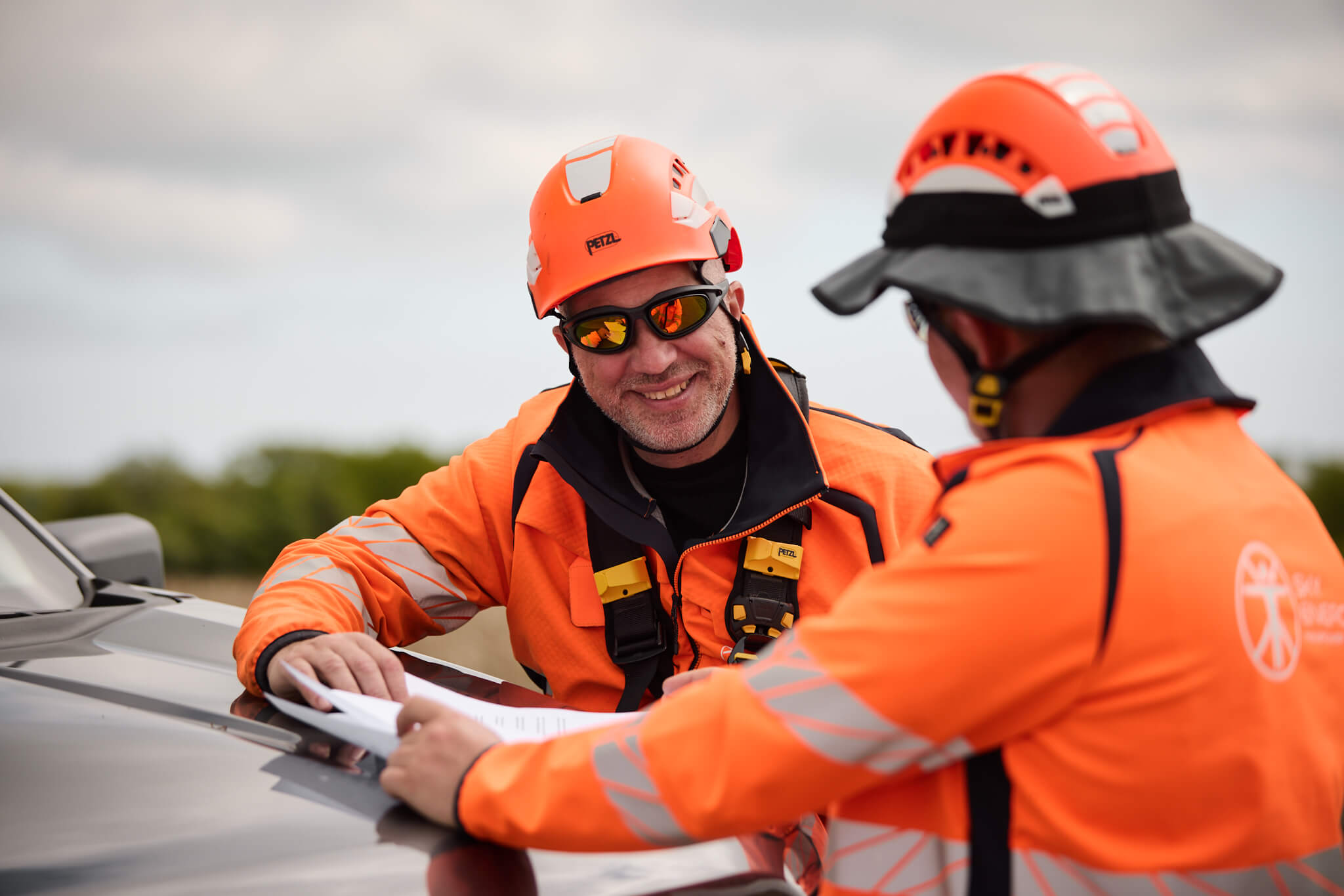
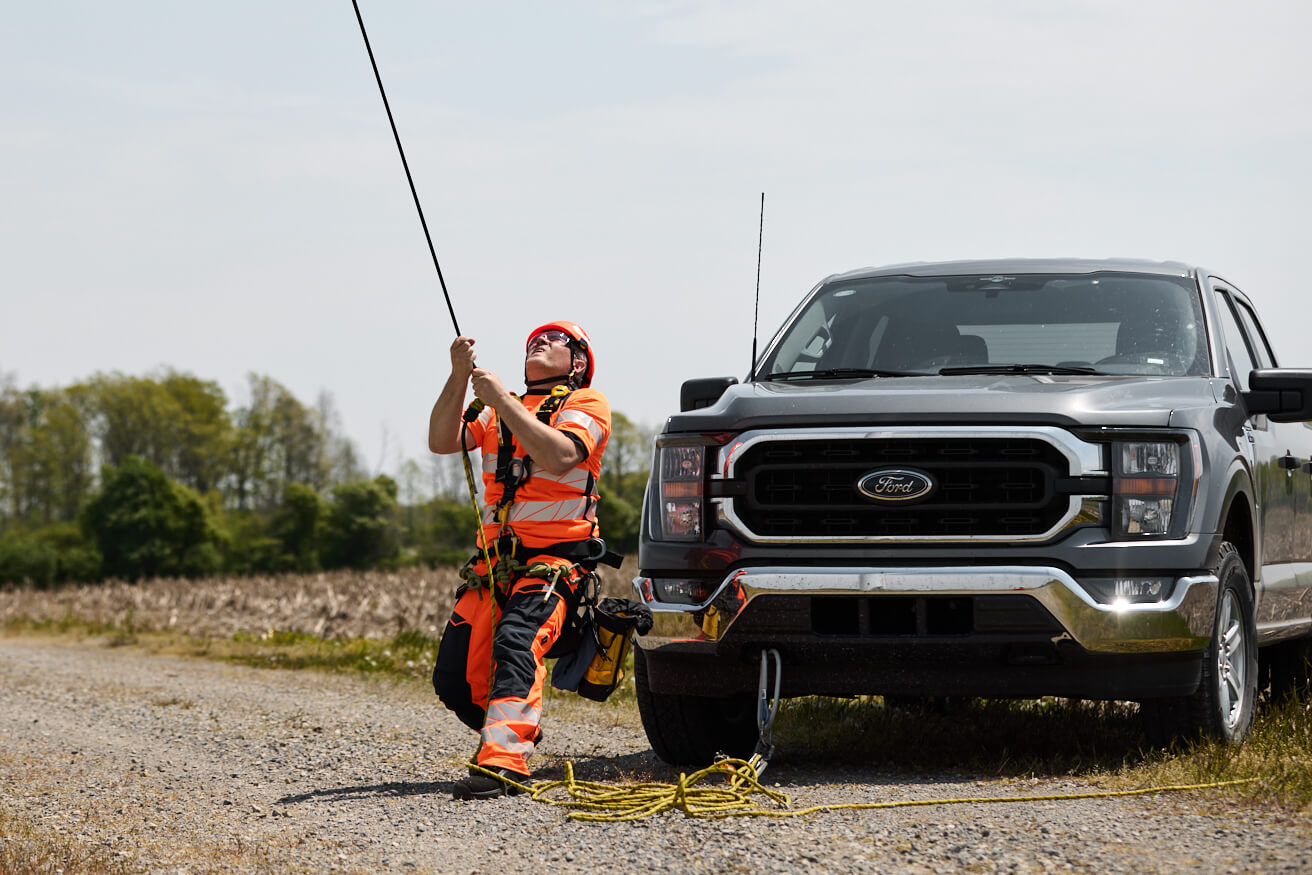
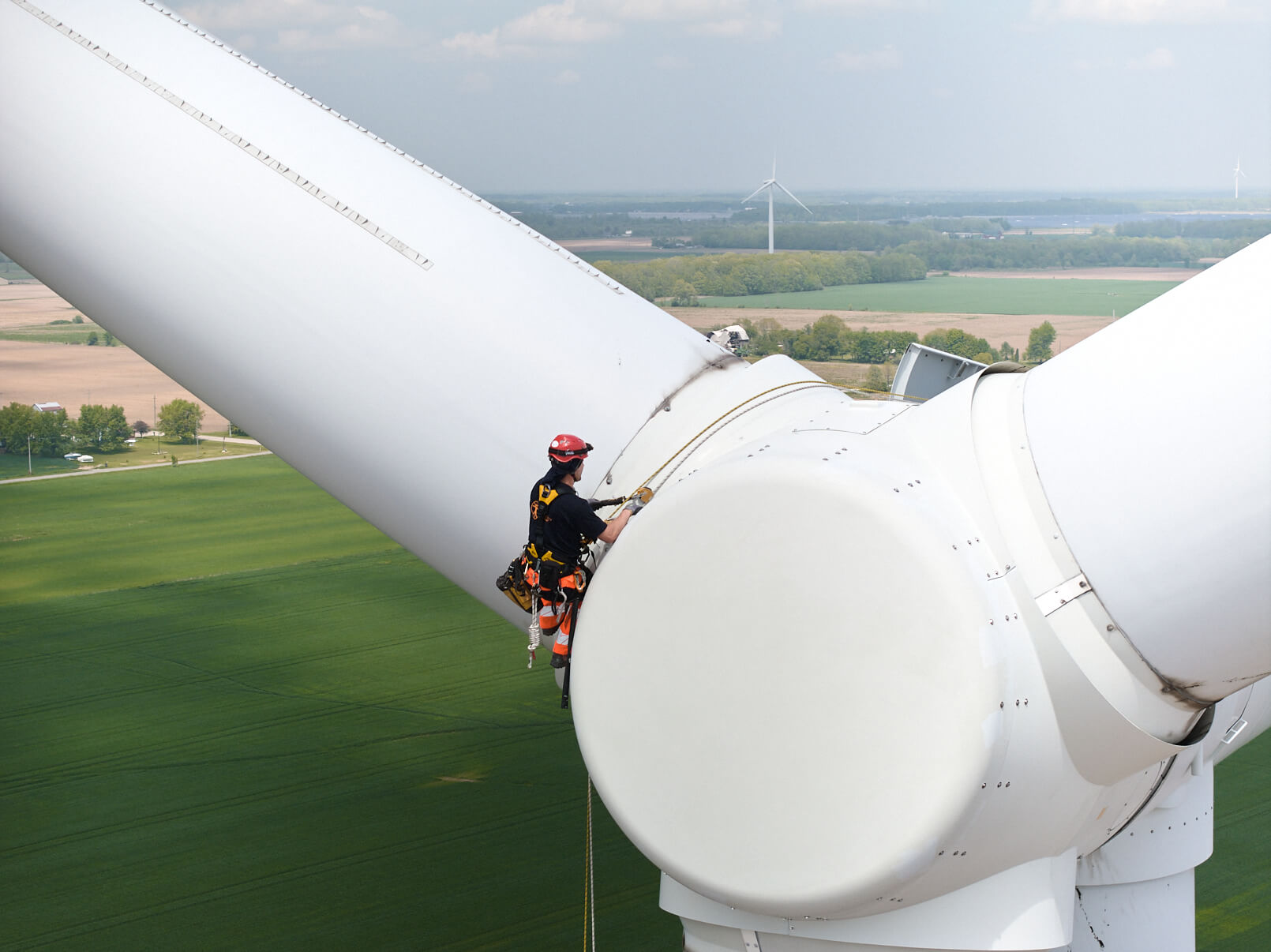
Sky-Energy is ISO-certified and our technicians are IRATA-certified (Levels 1–3) with GWO and specialist blade training. We repair and protect against leading edge erosion from Rope Access or from our covered repair platform, on all major turbine types (Vestas, Siemens, GE, Nordex, Senvion). For larger repairs or on sites where the climate is hard to control, the enclosed platform lets us manage temperature, humidity and airborne dust and fibre, keeping the work within specification.