What a rope access blade repair covers
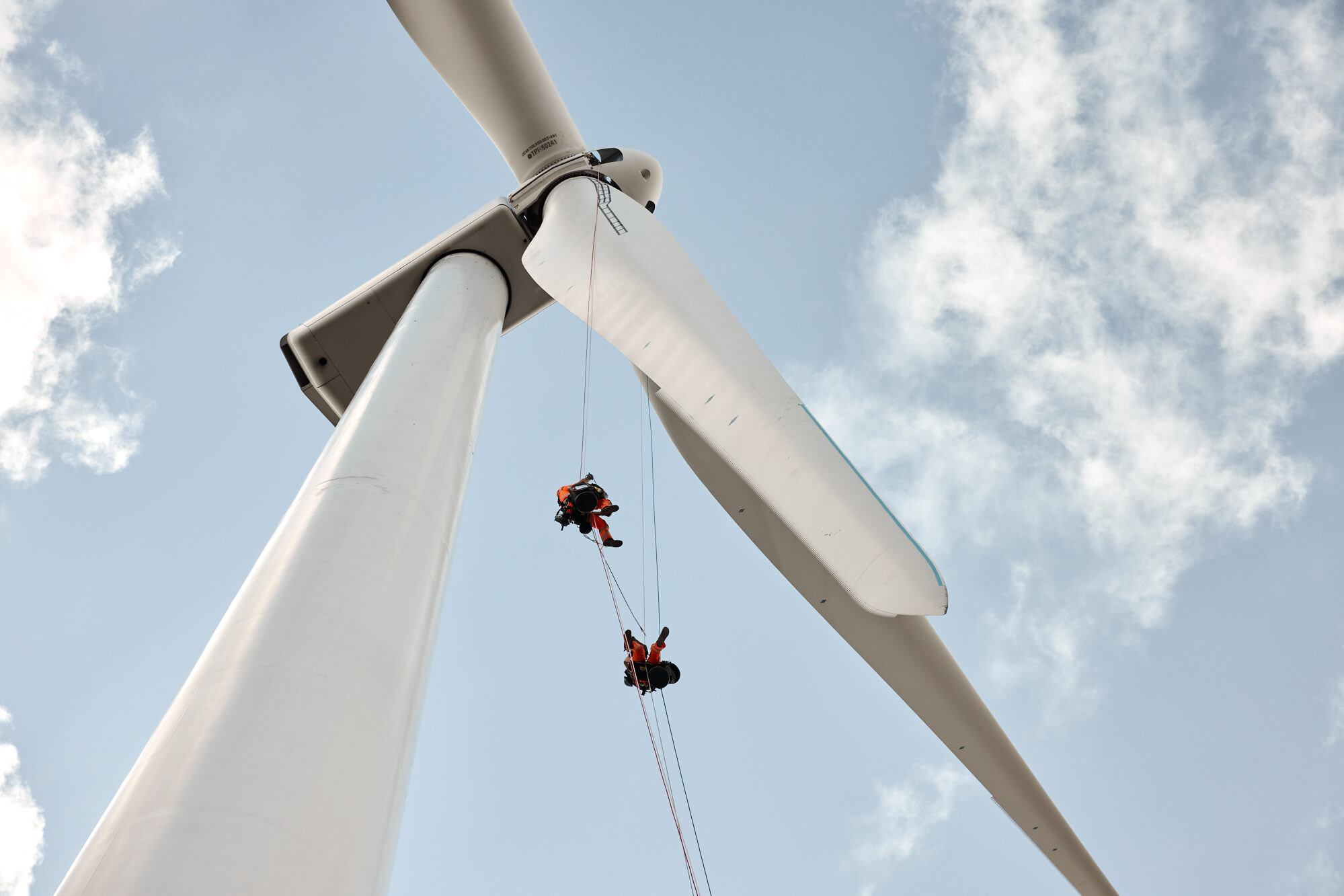
Rope access blade repair covers the full spectrum of surface and structural shell work:
- Leading-edge erosion, Wear and tear, cracks and coating breakdown.
- Non-lamination repairs — filler, fairing and surface refinishing.
- Inner and outer shell Laminate repairs.
- Open trailing edges.
- Core replacements.
- LPS upgrades, test or repairs
- Vortex generators to re-energise airflow and recover lift and AEP
Factory defects, wear that has grown through poor maintenance or missed annual inspections, and lightning damage are all assessed and categorised (Cat 1–5) on site, with anything beyond rope-team limits escalated to our internal blade specialists.
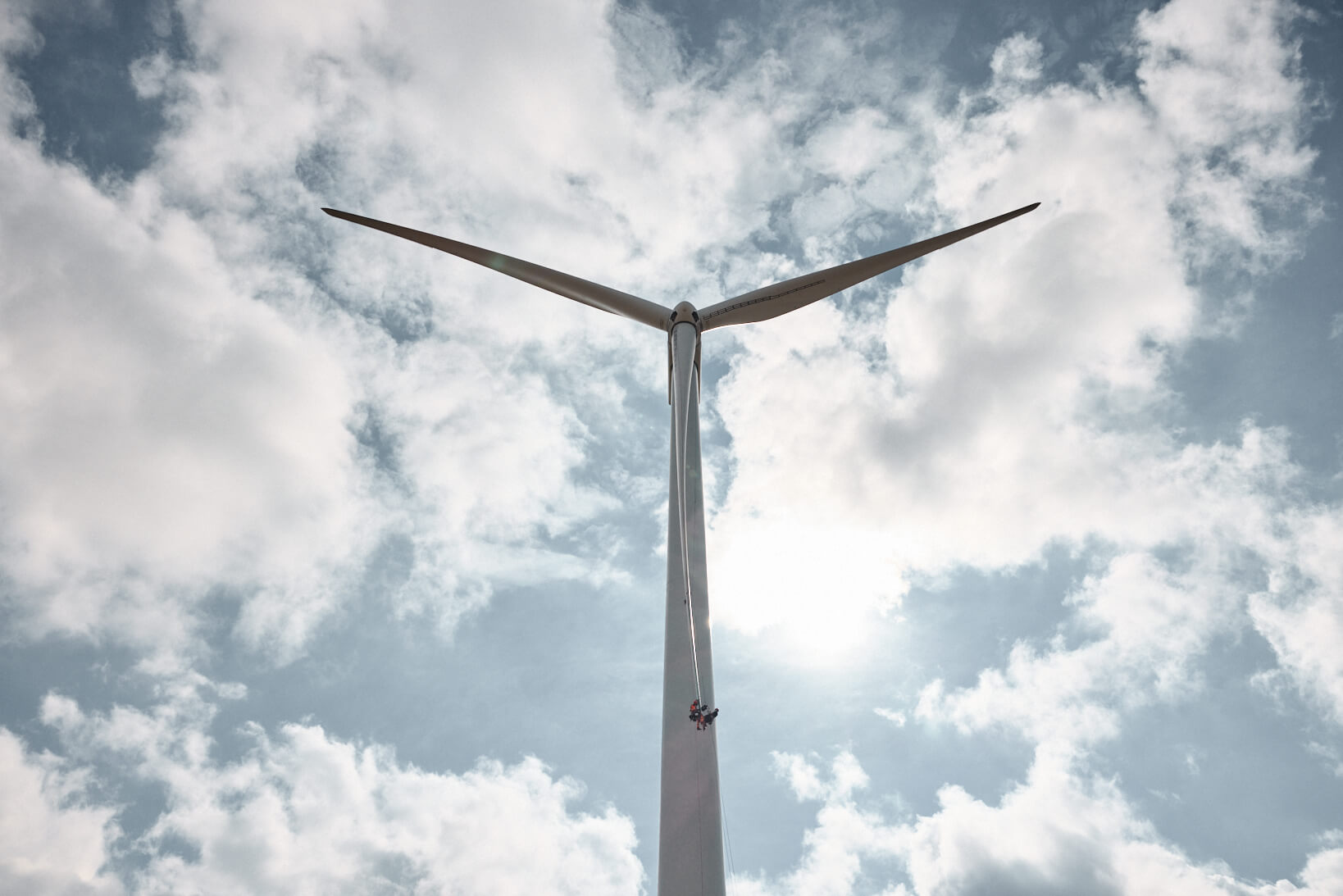
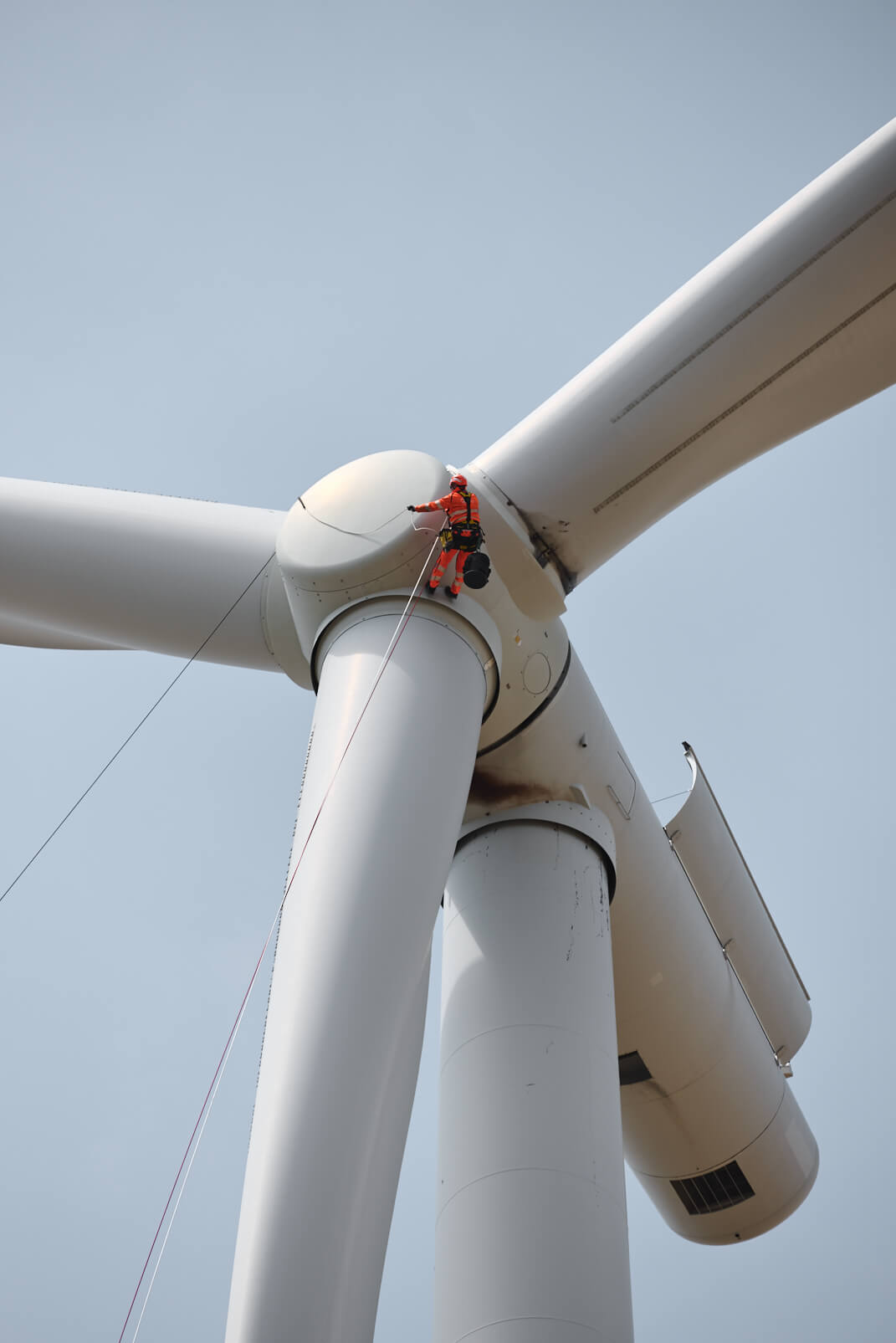
Rope access or platform — the right tool for the job
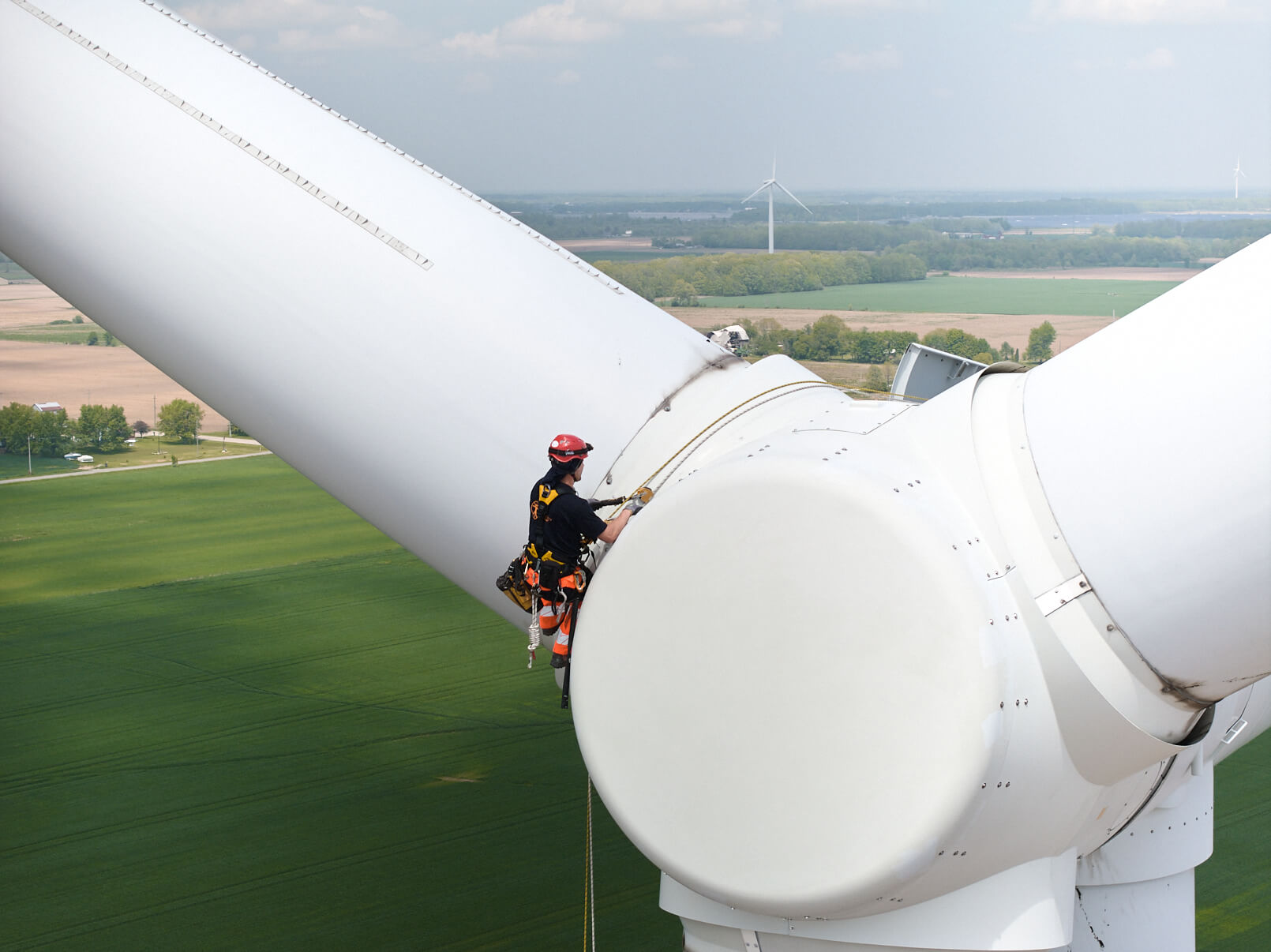
Rope access is fast, flexible and lower-cost, and it suits the large majority of blade repairs. But it is not always the right tool. For larger repairs running into several metres, or in climates that are hard to control, we deploy our covered repair platform. Because it is enclosed, the platform lets us manage temperature, humidity and the excess dust and fibre that a repair generates, so the work stays within material specification even when the weather outside will not cooperate. We choose the access method that delivers the most value for the site.
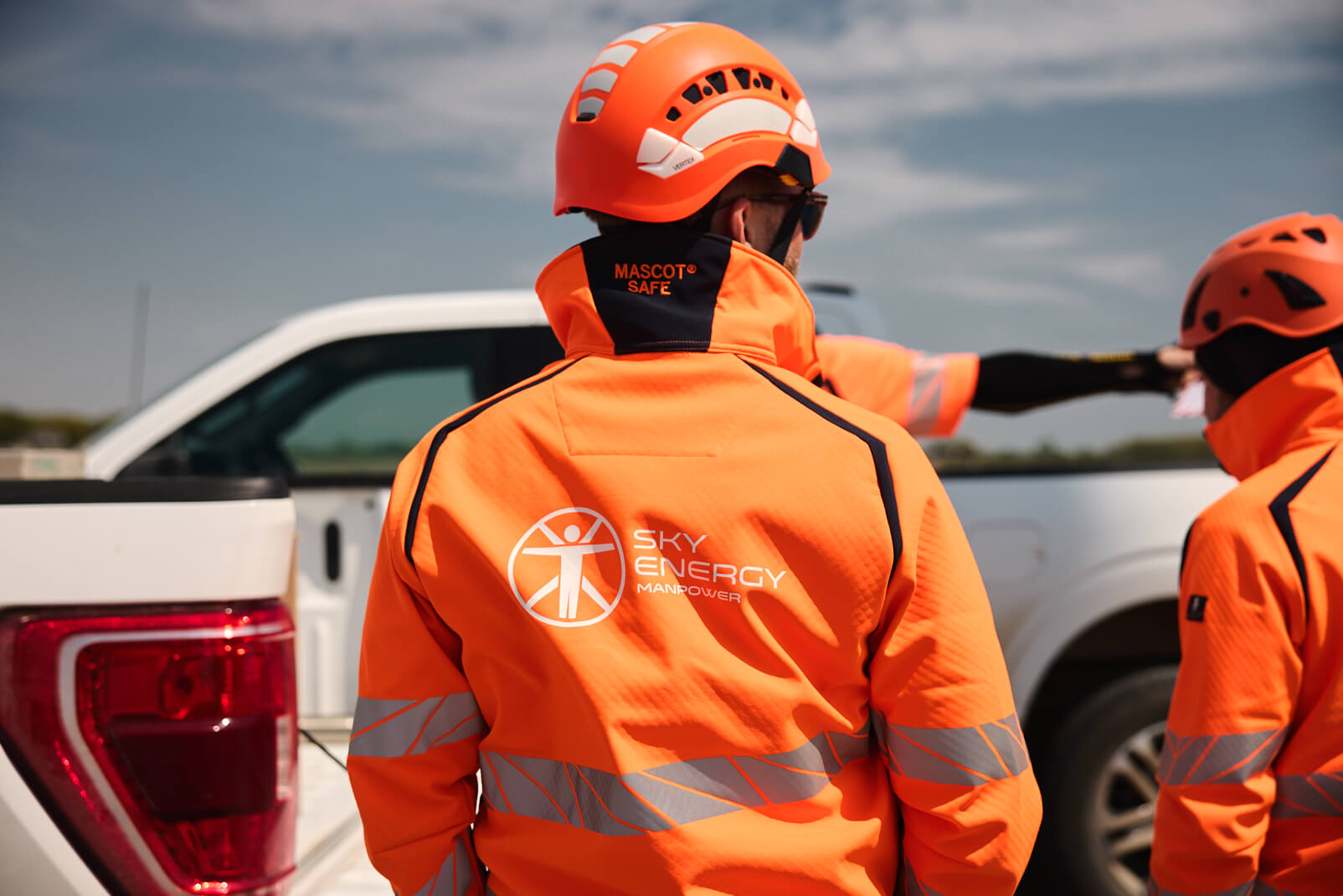
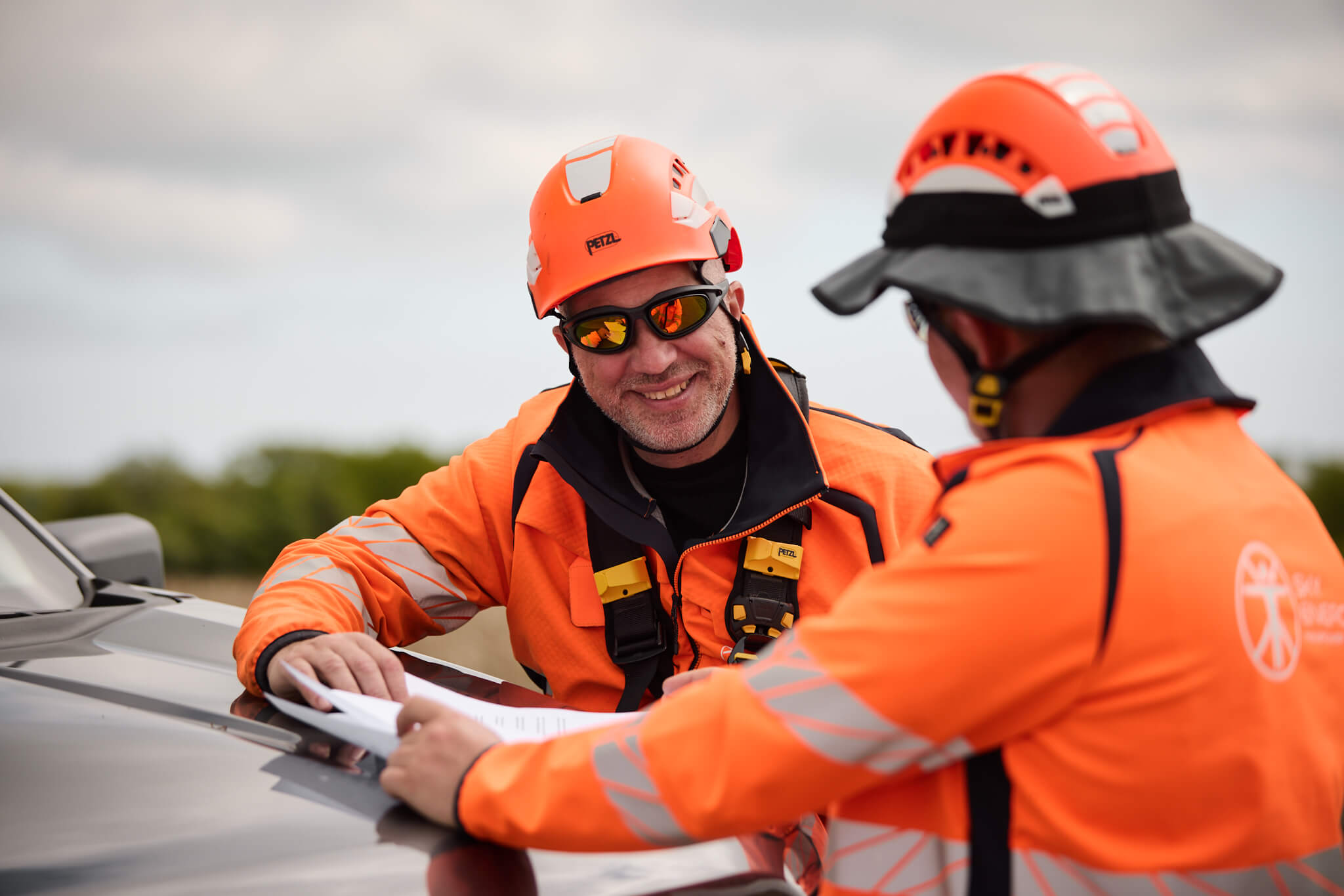
IRATA-certified, every technician
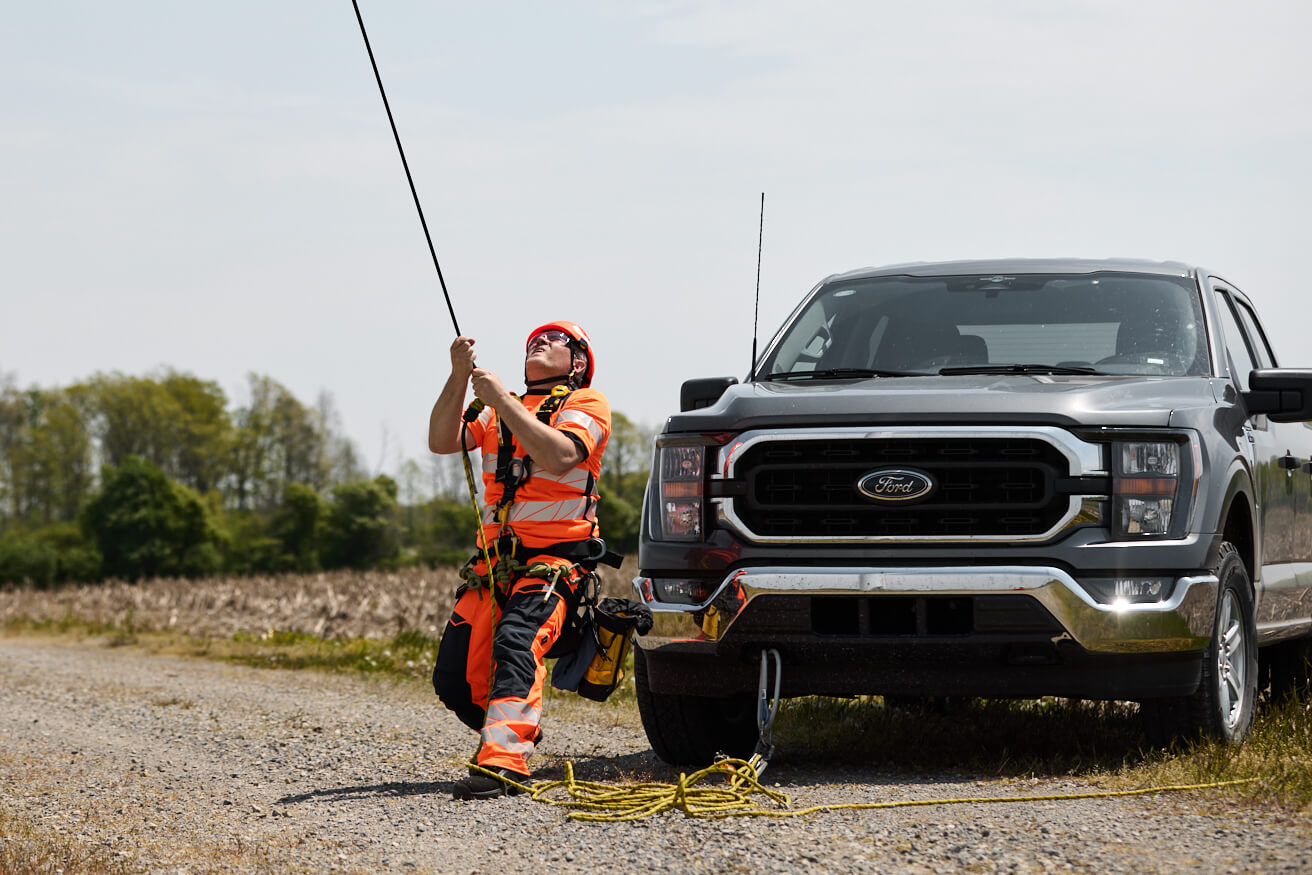
Every rope access blade repair is carried out by IRATA-certified technicians (Levels 1–3) with GWO and blade repair qualifications. Sky-Energy is ISO-certified, and our own QC department trains and audits the work in the field, the same standard in all countries.
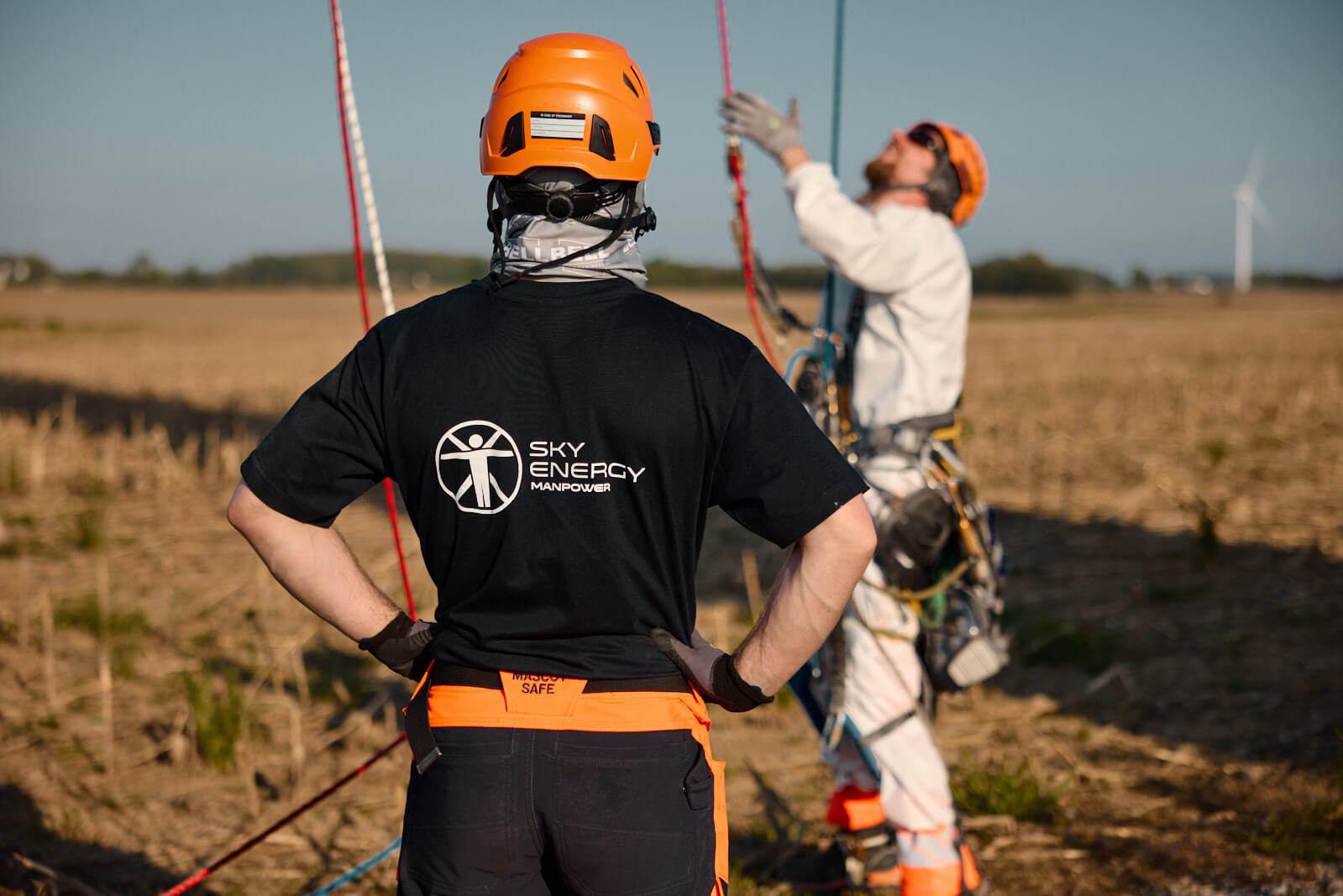
Certified, applied from rope access or platform
Sky-Energy is ISO-certified and our technicians are IRATA-certified (Levels 1–3) with GWO and specialist blade training. We apply leading edge protection from rope access or from our covered repair platform, on every major turbine type (Vestas, Siemens, GE, Nordex, Senvion). For larger applications running into several metres, or on sites where the climate is hard to control, the platform is often the better choice: because it is enclosed, it lets us manage temperature, humidity and airborne dust and fibre, so the leading edge protection is applied within specification whatever the weather outside is doing.